Part III of DeFIFA, a series on sports, policing, & incarceration
Part III of DeFIFA, a zine that my friends Cameron Michels, Leslie McCallum and I wrote, is here! In part I, we talked about the history of intersections between sports and the prison-industrial complex, and in part II, we covered the carceral juggernaut that has been built in Seattle around the 2026 Men’s World Cup (MWC). Today, we’re talking about how the MWC exacerbates existing oppression in the neighborhoods close to the stadium.
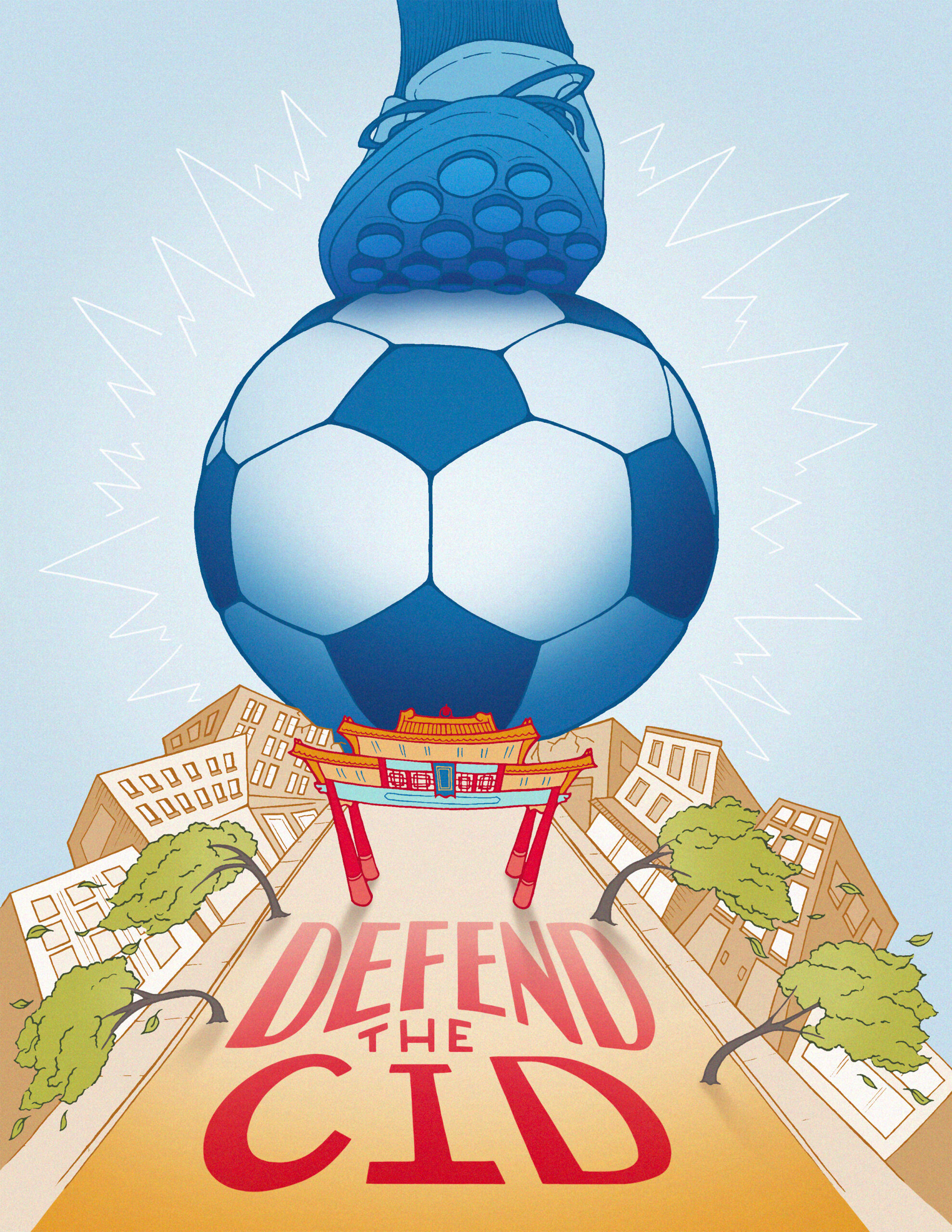
Please make sure to stick with this post until the end, where we offer some free and easy ways to act against the harms caused by the MWC! And thanks to artists at Protect Our Pitch 206 for providing free protest artwork.
The harms of Men’s World Cup will be felt all across the Seattle area, but the harshest impacts will likely be on the neighborhoods closest to the stadium. There’s a long history of oppression here: the Duwamish village of Dzidzilalich, the first land which was stolen from Coast Salish tribes by white colonizers in the mid-19th century, was in what is now horrifyingly called Pioneer Square. That neighborhood and the nearby Chinatown-International District (CID) have experienced many other violent and racist displacements since then, including the 1886 racial riot that forcibly expelled two hundred Chinese-American people from the city, segregation and redlining throughout the 20th century, the transportation of Japanese-American people to internment camps during World War II, the construction of I-5 carving the CID in half in the 1950s, and gentrification and housing unaffordability lasting through to the present day.
What does this history have to do with the MWC? Ask the Seattle FIFA organizing committee, which granted $50,000 to the Wing Luke Museum for a sculpture in memory of the 1886 anti-Chinese riots. There are, undoubtedly, links between that part of Seattle’s history and the present-day actions of US Immigration and Customs Enforcement (ICE) agents and their accomplices, who terrorize and kidnap immigrants with impunity. But it’s surprising that even those affiliated with the MWC are publicly making the connection between their own work and the history of violence towards immigrants in Seattle.
However, as grassroots organizations in Seattle have called out, little is being done to protect immigrants who are at risk now: ICE agents will still be at the Seattle MWC games, and elected leaders like Seattle Mayor Katie Wilson and King County Executive Girmay Zahilay have only made paltry attempts at protecting undocumented immigrants from them. Protect Our Pitch 206 is a campaign specifically to protect Seattle from the harmful impacts of the MWC; their Community Demands outline numerous ways that our local governments could – but haven’t – work to mitigate these harms. The CID Coalition, which fights against displacement and gentrification, is also declaring the CID an ICE-free zone, recognizing the increased risk to immigrants from the MWC and the failure of city officials to defend them.
Other marginalized communities in Seattle are also being targeted by MWC’s carceral apparatus. City government and police are increasing the use of cruel homeless encampment “sweeps”, a practice that reached record levels in Seattle under the previous mayoral administration, in areas near the stadium. Sweeps are fundamentally inhumane: unhoused residents are often given only a few minutes’ notice to clear out of an encampment, leading to increased violence and arrests, and any property they cannot immediately carry out is confiscated by the government – and only 7% of those impacted are able to get their belongings back. In anticipation of such sweeps, Mayor Wilson pledged to add 500 new shelter units by the time MWC began, but ultimately only 75 were open by the first match. Then again, even if all 500 units had been constructed, at least 89% of unhoused people who have suffered a sweep don’t actually end up sheltered, so adding such a small number of units would hardly make a dent.
Sex workers are also being harmed by the MWC – but perhaps not in the way you have heard. There is a popular narrative that mega sporting events cause an increase in sex trafficking; not only is this claim unproven, but it also serves to justify the incarceration of sex workers under the guise of “protecting” them – particularly sex workers of color. In Seattle, there has been an increase in raids of immigrant massage workers leading up to the MWC, the majority of whom are from Asian diasporic communities. In January 2026, the Federation of State Massage Therapy Boards held a summit in Tacoma where speakers spouted Orientalist nonsense to justify their anti-Asian and anti-worker approach, in a room where over half of attendees were law enforcement, and less than 5% were Asian. The Massage Parlor Organizing Project, a grassroots formation of Asian and Asian-American community members and workers in Seattle, is organizing along with environmental justice organization Puget Sound Sage to build power among the migrant workforce in the CID and fight the the racist criminalization of massage workers, recognizing the increased threats from the MWC.
Next time, we’ll talk about what MWC fans experience when they enter the stadium. Until then, please take action at the links below if you can!
What You Can Do
Actions to Take
Organizations to Follow and Support
If we missed other organizations or collectives that are organizing and providing community care around the MWC in Seattle, email me at sivarajan [dot] deepa [at] gmail [com] and we’ll add them to the online version of this zine!