Part VI of DeFIFA, a series on sports, policing, & incarceration
Seattle’s role as a host city for the 2026 Men’s World Cup (MWC) is over as of yesterday, but even its last game was ushered in by controversy. For the first time since 1962, FIFA nullified a suspension for a red card received on the field, in this case to US Men’s National Team player Folarin Balogun, who otherwise would not have been allowed to play in yesterday’s match. The reason? Pressure from President Donald Trump, who has long been a darling of FIFA.
Despite Balogun playing in the match, the US lost 4-1 to Belgium in Seattle yesterday, eliminating them from the tournament. But I think this helps illustrate what a farce FIFA is. It’s not a body dedicated to the sport of soccer: it’s simply a source of power, profit, and legitimization for fascists like Trump and genocidal regimes.
It doesn’t have to be like this. At its best, soccer is a community-building game that can provide powerful moments of connection. As the fan experience and actual safety for people has gotten lost in this MAGA sporting event, today’s post ends DeFIFA, the series I wrote with my friends Leslie McCallum and Cameron Michels, with some thoughts on community care and political action.
Please make sure to stick with this post until the end, where we offer some free and easy ways to act against the harms caused by the MWC! I want to highlight that the “Communities Not Cameras” rally is taking place TODAY from 1-2pm at Seattle City Plaza, where anti-surveillance activists will demand that Seattle Mayor Katie Wilson turn off CCTV cameras in the Stadium District now that the last MWC match in Seattle has been played. I unfortunately am out of town, but it sounds like a very cool event with a great line-up of speakers.
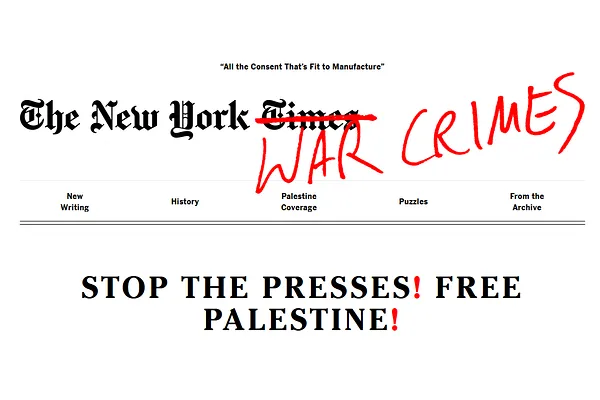
And thanks to artists at Protect Our Pitch 206 for providing free protest artwork about the MWC in Seattle. We’ve used several of their beautiful pieces in this series.
When we discuss abolishing the prison-industrial complex, we’re not only talking about tearing down existing systems of oppression: we’re also talking about creating the world where we don’t need those oppressive systems in the first place. When much of what we call “crime” is born of scarcity, and when laws and law enforcement in the US are more aimed at protecting property and profit than at protecting people, what would it look like to live in a society where communities were responsible for helping each other get our needs met? This is at the core of abolitionist praxis: combining political action with mutual aid to protect each other and build a more just world. And this can be achieved in sports as well as in every other sphere of our lives.
In the world of professional sports and sporting mega-events like the MWC, the dominant rhetoric claims that the carceral practices we’ve highlighted in this series are necessary for safety and security. But whose safety are we trying to ensure? Can we instead learn to practice a form of security that is about actually caring for the people in and around sporting events, whether they are immigrants, disabled, Black, Indigenous, queer, trans, Latinx, Asian, or from other marginalized communities?
We Keep Each Other Safe: Mutual Aid to Mitigate Harm
Many of these communities are already doing as much as they can to fulfill the abolitionist ethos of “we keep each other safe”, including the organizations in Seattle we’ve discussed like the Massage Parlor Organizing Project, Protect Our Pitch 206, Puget Sound Sage, CID Coalition, and more. Along with demanding political action around the MWC from our governments, they have also been doing the following in Seattle:
Soccer itself can be a site for protest. Two of the four official fan supporter groups for the Seattle Sounders, Emerald City Supporters and Gorilla FC, have been engaging in anti-fascist organizing at Sounders games for years. And during this year’s MWC, anti-war activists held a People’s Football Match on a street in view of Lumen Field on the same day as the match between Egypt and Iran, condemning President Trump’s war on Iran and FIFA’s support of Israel and the genocide of Palestinians.
Other community sports teams do this work regularly. For example, in a time when the US government is institutionalizing and galvanizing violence against trans women and girls by fearmongering about their (often hypothetical) participation in sports, trans folks are creating those spaces for themselves. Puget Sound Pronouns is a recreational softball team and nonprofit in Seattle founded five years ago by Gwendy Miller to center trans and nonbinary players. Pronouns also has a history of giving back to the trans community through running softball skills clinics for queer and trans youth, fundraising for trans rights organizations like the Gender Justice League, and volunteering at events like Queer Prom Seattle.
We asked Gwendy to tell us about what’s important to her about Pronouns and how at the end of today’s post, but here’s a shorter excerpt:
“The importance to me of an organization like the Puget Sound Pronouns is to create a beacon for gender questioning people of any age to see that it’s possible to thrive while trans. I would have benefited greatly from being able to see trans adults who not only excelled at one of their hobbies, but also were living happy, fulfilling lives. I am welcomed as just another one of the girls in my softball community – and making sure trans folks who think they can never fit in if they come out can see that is so meaningful. I wouldn’t have waited until I was 31 to come out if I saw an organization like mine giving me an example of being a successful trans person with joy and community in my life.
Whether that’s seen through visibility of us going out there and competing, or through our skills clinic, or just going and talking to youth and adults alike about how it is possible to be yourself and still be happy doesn’t matter to me, as long as the message that you can be happy and trans lands. How the message is delivered matters less than if it is seen and heard, so that’s why we try to be seen in different contexts.
As far as how we create safety during games – it comes down to good allyship. By establishing ourselves as a group of joyful, dedicated, driven, and talented trans players, we’ve built friendships with the rest of the community we play in. We’ve rarely seen anyone cause a fuss or start anything about trans players being in the lineup, but we’ve had cis allies call out any microaggressions and ask the people engaging them to explain what they mean and what they’re upset about, and when they see they’re on an island in a sea of support, they meekly back down pretty quickly.”
Stadiums for People, Not Profit
Meanwhile, most stadiums treat security as a matter of property-centered risk management that is “primarily focused on limiting liability for facility damage and financial exposure” rather than protecting players, fans, or staff at their events. Within the stadium itself, we know that carceral tactics have the capacity to harm fans rather than keeping them safe. Carceral tactics also displace the responsibility of safety onto only those assigned to law enforcement roles and give us a false sense of security when instead we could all be doing community safety work. For instance, many people who are not healthcare providers still voluntarily get training on CPR and basic First Aid in case they are in a situation where they are the only ones available to help someone. What if trainings on non-carceral deescalation practices were just as popular, and fans could help each other if conflicts arise?
There is still a role for stadium staff to make sporting events safer, but it is not in surveillance or other law enforcement tactics. Since the stadium is the physical space where events like the MWC occur, their leadership and staff should be focused on making that space as accessible and community-oriented as possible. Lumen has some great accessibility resources already: wheelchair escort services from gate to seat, autism toolkits that include headphones for noise and sensory toys, Assisted Listening Devices, a low-sensory room for anyone feeling overstimulated, closed captioning boards, and more. But many of these resources are limited and offered only a first-come, first-served basis; they could be greatly expanded. And given that the COVID-19 and other viral infections are still a significant threat, stadiums could also be practicing viral safety by improving indoor air quality and encouraging mask use, or at the very least creating masks-required sections that people can opt into.
Reimagining the World Cup
If any of your reactions to these ideas are along the lines of “those are nice ideas but they’re not practical” or “they might work for community sports or even professional club sports, but never at the scale of the MWC”, we want to encourage people to start their brainstorming from a mindset of abundance, not scarcity. When we’re dreaming up ideas, what if we talked first about what we want and what would be the ideal for a just world, and then start thinking about how to implement them? Otherwise, we risk losing good ideas just because of a lack of creativity or imagination. And if we had the same level of time, attention, and resources devoted to real safety and community in sports that Seattle’s government got for its MWC carceral juggernaut, we might actually be able to accomplish a lot of things that currently feel impossible.
And if you’re still skeptical, we want to put a final question to you: who actually benefits from their city hosting a mega sporting event like the MWC?
If you say it’s the host cities and neighborhoods near the stadium, who get an economic boost – cities are actually more likely to lose money hosting the MWC, and the benefits to nearby neighborhoods can be highly uneven, which has been borne out by businesses in Seattle’s Chinatown-International District (CID) seeing lower revenues during this MWC than during the period in other years, even while the neighborhood bears the brunt of its negative impacts.
If you say it’s the players, who get to have a huge live audience – the pros and cons of playing for a crowd actually depend on the athlete, and factors like racism play a part in decreasing the benefits for athletes from marginalized communities; for instance, when Italy’s Serie A league played without an audience during the first year of the COVID-19 pandemic, Black soccer players actually performed better when they didn’t have to endure racist heckling, and they also had fewer fouls called against them, likely because referees weren’t unconsciously biased by that racist heckling.
And if you say it’s the fans, who get to enjoy the games in-person – the truth is that the vast majority of fans will never actually attend a live MWC game, even if they live in or visit a city where one is held. Most people will watch it televised in their communities: in bars, community centers, homes, parks, shopping malls, and more. So much of the excitement and joy that we’ve seen communities sharing around the MWC has happened in these other spaces.
So it’s not just how we address community safety that we can reframe: we can and should rethink mega sporting events themselves. We firmly believe that there are other ways to find the same kind of joy and camaraderie that we do around events like the MWC without all of its harms, especially when most people don’t watch it in person anyway. We also encourage fans of the MWC to check out their local soccer teams (and not just their men’s teams! We are big supporters and season ticket holders for Reign FC, Seattle’s women’s pro women’s team) whose games are far easier to attend.
All three of us are huge sports fans – we wouldn’t spend so much time working on this gargantuan essay if we weren’t – so we come at these ideas from a place of love and passion. That’s what should be centered in events like the World Cup, not the profits for FIFA or the prestige for governments. We truly believe that with creativity, passion, and a focus on community, there is a way to get there – a way that enhances, democratizes, and improves on everything people already love about the World Cup.
What You Can Do
Actions to Take
Organizations to Follow and Support
Statement on Puget Sound Pronouns by Gwendy Miller
“The importance to me of an organization like the Puget Sound Pronouns is to create a beacon for gender questioning people of any age to see that it’s possible to thrive while trans. I would have benefited greatly from being able to see trans adults who not only excelled at one of their hobbies, but also were living happy, fulfilling lives.
When I was young, trans folks were almost exclusively the butt of jokes in pop culture, or seen as the weird villain upending the lives of “normal” people in Jerry Springer or Maury or similar shows. Being able to show that we are like anyone else, that our transness doesn’t represent our morality or our decency, but that we’re just people with hobbies and dreams and friends and loved ones like any of their cis peers means so much. When all you see of trans representation is characters that are basically overly-sexualized villains setting out to trick and harm normies, it becomes easy to think “oh no, I must not be THAT”…and we’re not that, and that’s what I think makes our work so important. Most of us grow up to work a normal job, and have friends, loved ones, pets, hobbies, dreams, fears – the range of the human experience is no different for trans people than for anyone else.
My talent is as an athlete – I am only recreationally skilled, but I got as good as I am because I worked hard, listened to my coaches, and had a drive to be as good as I possibly could be at something I love. For me, my maximum ability level is as a damn good recreational player, but the nature of my birth isn’t why. I excel because I’m driven, and it’s okay to excel at sports while trans. Given that us playing sports is being used as a cultural wedge issue, it’s important to remind folks that you can find acceptance and support doing things you love, no matter what bigoted forces want you to believe.
I am welcomed as just another one of the girls in my softball community – and making sure trans folks who think they can never fit in if they come out can see that is so meaningful. I wouldn’t have waited until I was 31 to come out if I saw an organization like mine giving me an example of being a successful trans person with joy and community in my life.
Whether that’s seen through visibility of us going out there and competing, or through our skills clinic, or just going and talking to youth and adults alike about how it is possible to be yourself and still be happy doesn’t matter to me, as long as the message that you can be happy and trans lands. How the message is delivered matters less than if it is seen and heard, so that’s why we try to be seen in different contexts.
Unfortunately, in these times we’ve largely scaled back our presence in the community as we don’t want to have a family torn apart just because we want to encourage people to be okay with being themselves. We are working to re-introduce some programming next year in our local women’s league in an intentional way that serves adult trans folks, but working with youth is on the back burner for now until we can be certain that our events won’t be easy targets for lawlessness enforcement to come harm queer kids and their families.
As far as how we create safety during games – it comes down to good allyship. By establishing ourselves as a group of joyful, dedicated, driven, and talented trans players, we’ve built friendships with the rest of the community we play in.
We’ve rarely seen anyone cause a fuss or start anything about trans players being in the lineup, but we’ve had cis allies call out any microaggressions and ask the people engaging them to explain what they mean and what they’re upset about, and when they see they’re on an island in a sea of support, they meekly back down pretty quickly.
When you’re a part of a team, you become a teammate first, and everything else comes second. We work for common goals, and sports teams require diverse skillsets and specializations in different skills to succeed not just on the field, but as a group of people realizing they’re trying to represent something bigger than themselves.
Teamwork breaks down racial, gender, orientation, and other social barriers – when you share a common goal, suddenly a person’s humanity is easier to see, and our work in showing that our goals are no different from anyone else’s has made our humanity easy to see, and easier for our allies – a group that expands the more we play together and are seen in community spaces – to stand up for.”